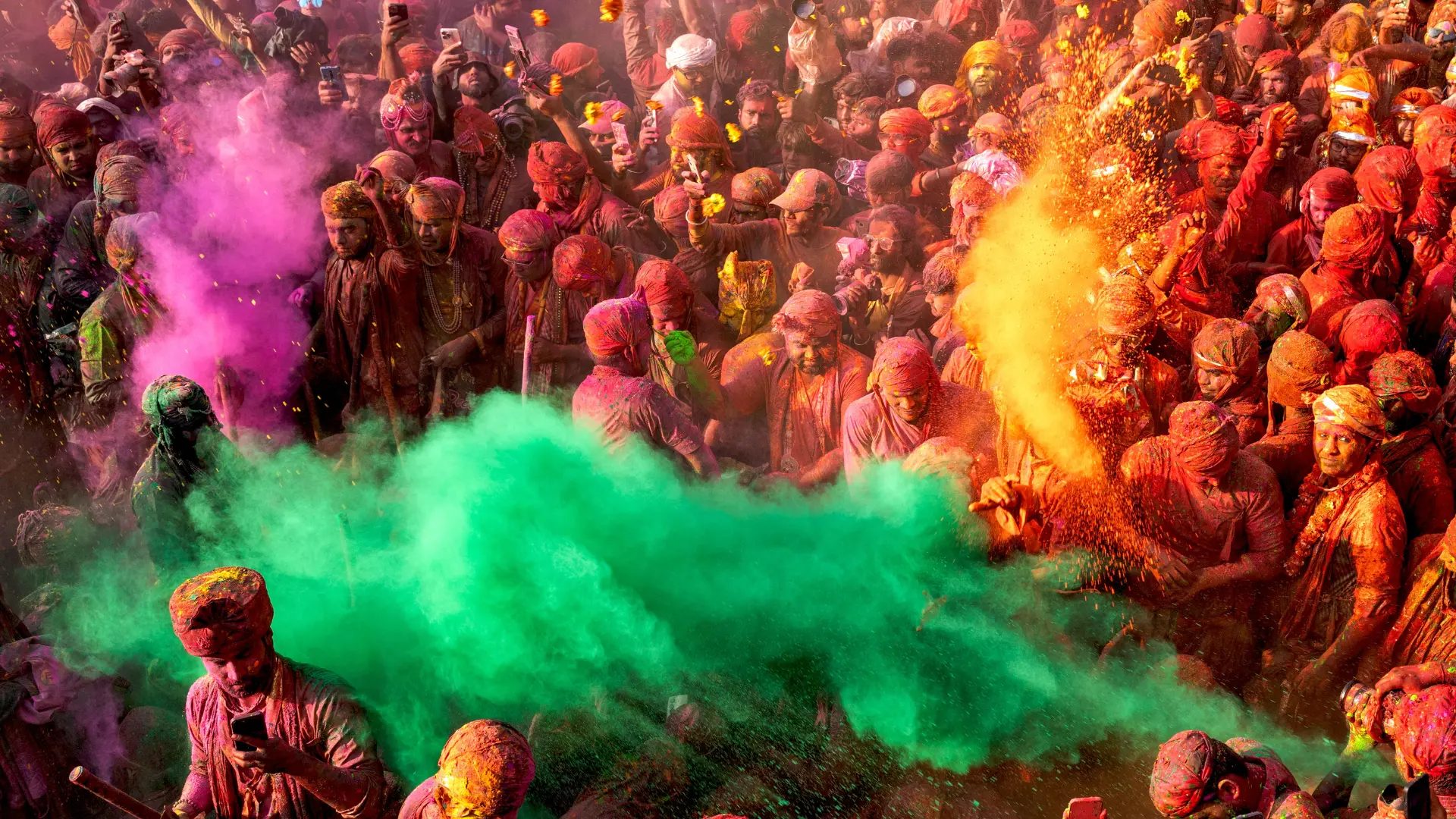
Holi in India is no longer just a festival; it’s a spectrum. It’s where the ancient dust of Mathura meets the turquoise eco-vibes of the Himalayas.
In 2026, Holi isn’t just about the colours in your neighbourhood, it’s about the vibe of the destination. As travellers increasingly seek "immersion" over just "visitation", the way India celebrates the Festival of Colours has transformed from a domestic ritual into a global bucket-list experience.
Whether you want to be drenched in the traditional celebration of the Braj region or escape to a quiet mountain valley where the colours are made of flowers, here is your definitive guide to celebrating Holi in 2026.
The Evolution of Holi: Past, Present, and Future

- The Past: Historically, Holi was a local community affair. You stayed home, played with neighbours, and ate home-cooked gujiyas. Travel was mostly limited to people returning to their hometowns.
- The Present: Today, Holi is "event tourism". Indians are travelling specifically to witness regional variations of the festival. Places like Vrindavan and Pushkar now see record-breaking footfalls from both domestic travellers and international vloggers.
- The Future: The trend is moving toward a sustainable Holi. Think organic flower-based colours; "Dry Holi" in water-scarce regions; and boutique "Glamping" Holi festivals that focus on folk music and artisanal food rather than chemical sprays.
The Classics: Where the World Watches

If you want the "real" deal, these three spots remain the gold standard for 2026:
- Mathura & Vrindavan (The Soul of Holi): Experience the Phoolon Wali Holi (Holi with flowers) at Banke Bihari Temple. It’s crowded and spiritually electrifying.
- Barsana (The Lathmar Tradition): Witness the famous tradition where women playfully beat men with sticks, recreating the legends of Radha and Krishna.
- Pushkar (The Global Party): Pushkar transforms into a giant open-air dance floor. With thousands of people from across the globe, it’s the most "Instagrammable" Holi in India.
Where Indians Are Actually Going in 2026:

A. The Royal Route: Udaipur & Jaipur
- For those who prefer luxury, the Royal Holi of Udaipur is the top choice. The Mewar royal family leads a magnificent procession, followed by the lighting of the Holika Dahan.
- Musafir Tip: Fly into Udaipur early. Book your Udaipur flights here.
B. The Cultural Route: Shantiniketan, West Bengal
- Known as Basanta Utsav, this celebration started by Rabindranath Tagore is graceful and artistic. Expect yellow sarees, traditional dances, and "abir" (dry colours). It’s perfect for families and culture-seekers.
C. The "Warrior" Route: Anandpur Sahib, Punjab
- Experience Hola Mohalla, where the Nihang Sikhs display incredible martial arts, horse riding, and sword fighting. It’s a powerful, high-energy alternative to the usual colour play.
The Offbeat Secret: Sangla Valley, Himachal Pradesh

Want to escape the heat and the crowds? Head to the mountains. In Sangla, Holi is celebrated with local wine (Angoori), traditional dance, and a community feast. It’s one of the few places where you can play Holi amidst the snow.
Practical Tips for the 2026 Holi Traveller
![Tips_for_Indian_Travellers[1].jpg](/_next/image?url=https%3A%2F%2Fcms-in.musafir.com%2Fuploads%2FTips_for_Indian_Travellers_1_48577706f9.jpg&w=2048&q=75)
- Transport: Trains to Mathura and flights to Jaipur/Udaipur book out months in advance. Use Musafir.com to compare budget airlines for the March long weekend.
- Skin & Hair Care: Apply a thick layer of coconut oil or sunscreen before heading out.
- Weather: March marks the beginning of the Indian summer. Stay hydrated with Thandai (the traditional Holi drink), but ensure it's from a reputable source.
- The "Safety" Rule: Especially in places like Mathura and Pushkar, it’s best to play in groups and finish the celebrations by early afternoon.
FAQs: Everything You Need to Know

Q1: When is Holi 2026? A: Holika Dahan is on Tuesday, March 3, and the main colour festival (Dhulivandan) is on Wednesday, March 4, 2026.
Q2: Which is the safest place to celebrate Holi for solo female travellers? A: Udaipur and Shantiniketan are widely considered the safest and most organised. Pushkar is also vibrant but can get very crowded, so travelling in a group is recommended.
Q3: Is vegetarian food easily available during Holi? A: Absolutely. Holi is a vegetarian-heavy festival. Don't miss out on Gujiyas, Malpuas, Dahi Bhalle, and the saffron-infused Thandai.
Q4: How many days do I need for a Mathura-Vrindavan Holi trip? A: To see the full range (Lathmar to Phoolon Wali Holi), a 4-day itinerary starting from Barsana and ending in Mathura is ideal.
Q5: What should I wear? A: The "unofficial uniform" is an old white cotton kurta-pyjama. White makes the colours pop in photos, and cotton keeps you cool.
Q6: Can I combine a Holi trip with an international getaway? A: Yes! Indians can use the March 4 holiday to take a 2-day leave and head to Dubai or Thailand for a 5-day break.
Q7: Is it worth visiting Hampi for Holi? A: Yes! Hampi is one of the few places in South India that celebrates Holi with great fervour, culminating in everyone jumping into the Tungabhadra River to wash off the colours.
Q8: Are airports and public transport open on Holi? A: While most local shops and buses stop by noon, airports and flights operate normally. Taxis like Uber/Ola may be scarce between 10 AM and 3 PM.
Q9: What is the cost of a Holi trip in India? A: A mid-range 3-day trip can cost between ₹15,000 and ₹25,000 depending on your flights and hotel choice.
Q10: How do I book a customised Holi package? A: You can get in touch with our travel experts for curated holiday packages that include flights, stays, and guided temple tours in the Braj region.
Conclusion: Find Your Shade of Joy

Whether you’re seeking the royal heritage of Rajasthan, the spiritual intensity of Vrindavan, or a quiet snow-clad celebration in the Himalayas, Holi 2026 is your chance to see India in its most vibrant form.
Ready to splash into 2026? Let Musafir.com handle your flight bookings and hotel stays so you can focus on the colours and the Gujiyas.
Which city are you colouring red this year?